Air
Wall-Pelvis Phase-Lock Ratios
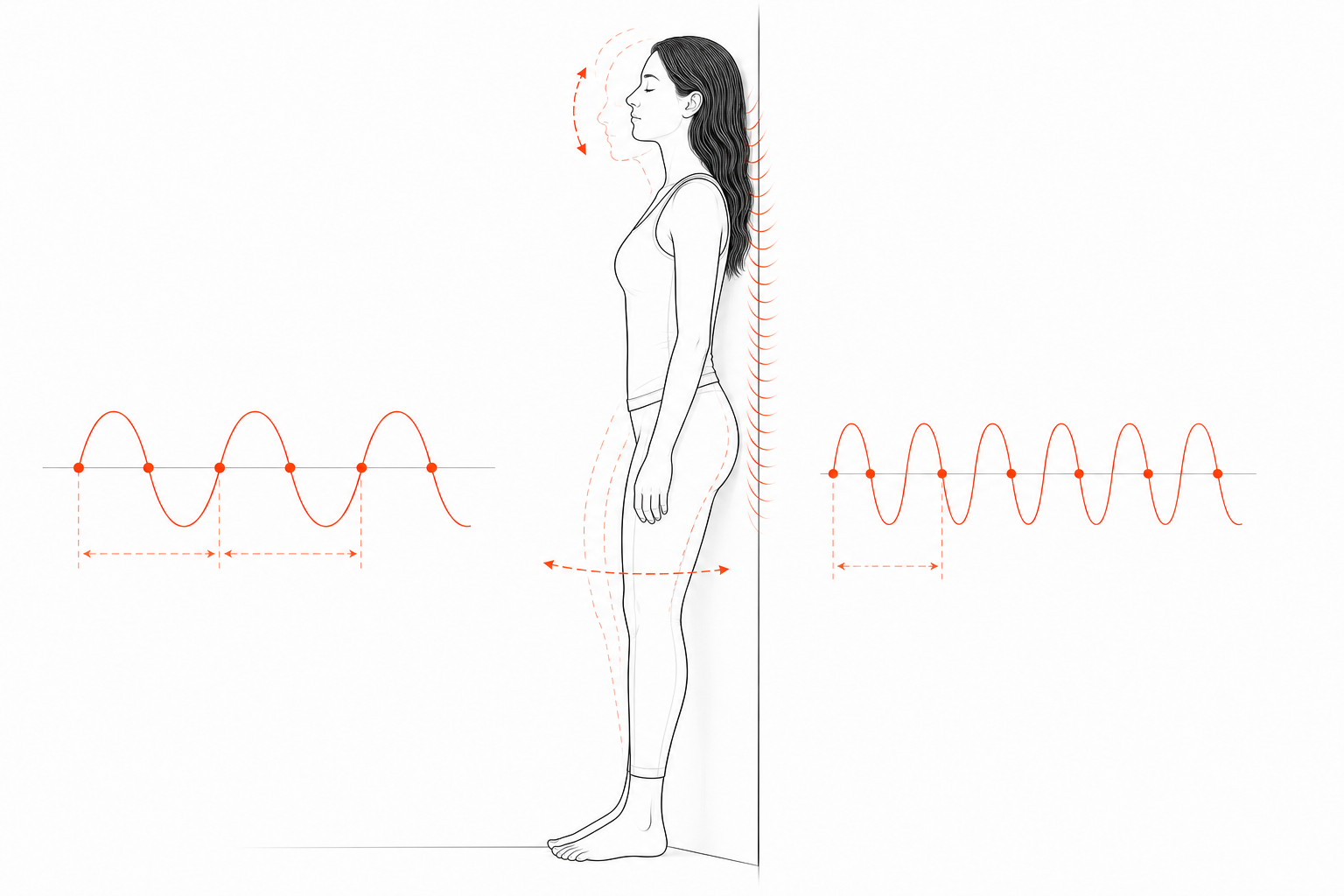
Stand against a wall with the back lightly contacting it from sacrum to occiput, and produce small forward-back micro-shifts of the pelvis against the wall surface. Map the integer ratios at which lock occurs (1:1, 1:2, 2:3) and which one feels most thermodynamically stable,...
Full Lesson Notes
Complete Practice
Stand against a wall with the back lightly contacting it from sacrum to occiput, and produce small forward-back micro-shifts of the pelvis against the wall surface. The wall acts as a phase reference. Now begin to nod the head in a slow yes-no at a different rate; the wall contact reveals when the two oscillations phase-lock — the contact pressure modulates audibly. Map the integer ratios at which lock occurs (1:1, 1:2, 2:3) and which one feels most thermodynamically stable, in the sense that small perturbations return to the same ratio rather than drifting to another. Challenge: Detecting the return-to-ratio after perturbation requires holding the rhythm for many cycles — easy to lose count.